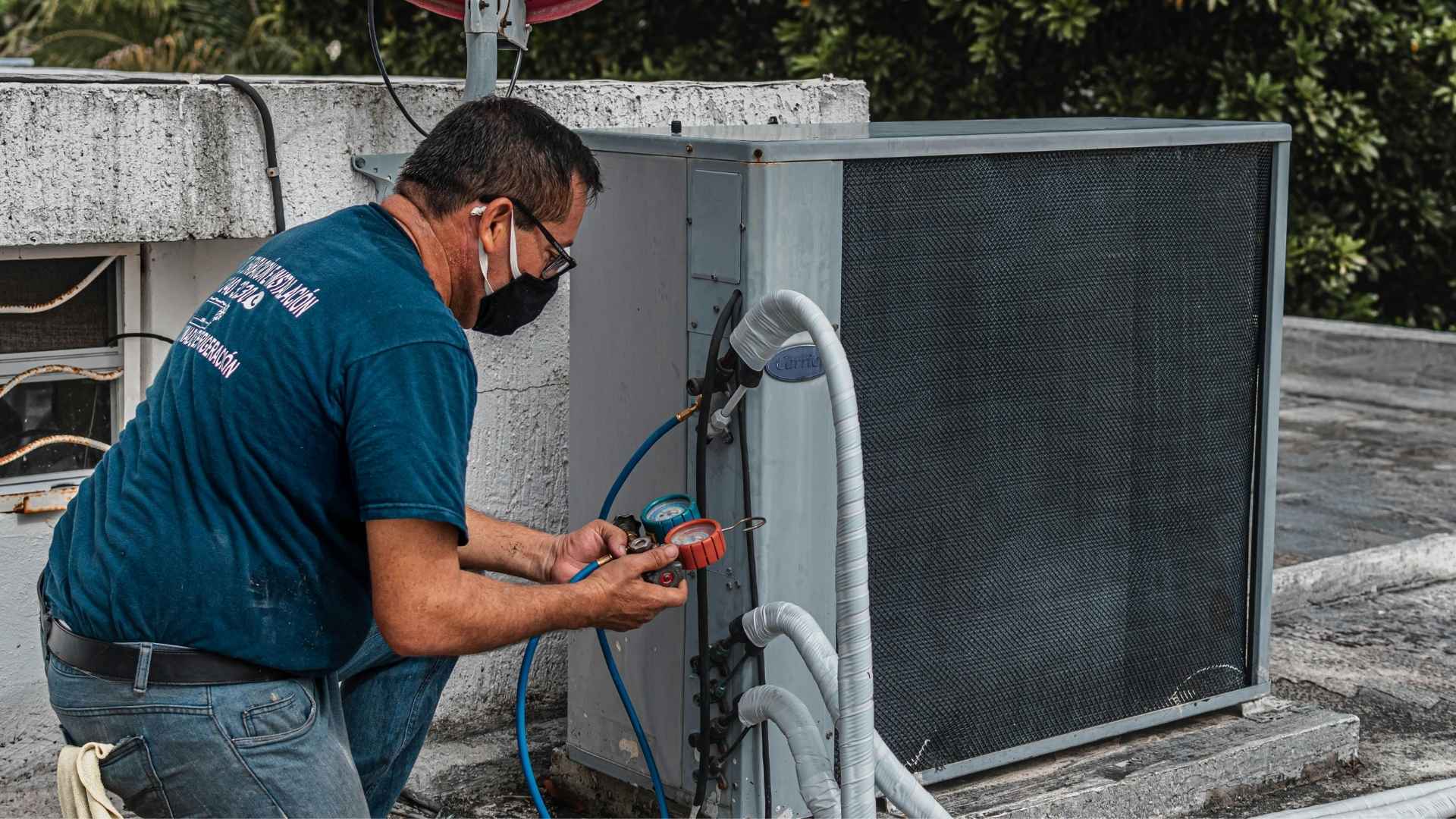
When a homeowner’s air conditioner breaks down on a hot July afternoon, they are not flipping through a phone book. They are grabbing their phone and searching for the nearest HVAC company that can help them right now. If your business does not appear in those results, that customer is calling your competitor. That is the reality that local SEO addresses, and it is why getting your local search presence right is one of the most valuable investments an HVAC company can make.
Local SEO is the practice of optimizing your online presence so your business appears prominently when people search for services in your area. For HVAC companies, this means showing up when someone types “furnace repair near me” or “air conditioning installation in [your city].” The businesses that appear at the top of those results earn a disproportionate share of calls, bookings, and revenue.
This playbook covers the core strategies that move the needle for HVAC businesses: claiming and optimizing your Google Business Profile, building consistent citations, earning reviews, creating locally focused content, and making sure your website is set up to convert the traffic you earn.
Why Local SEO Matters More for HVAC Than Almost Any Industry
HVAC is an urgency-driven industry. Customers rarely plan when it comes to heating and cooling emergencies, which means their search behavior is immediate and location-specific. According to Google, 76% of people who search for something nearby on their smartphone visit a related business within a day, and 28% of those searches result in a purchase. For HVAC companies, that window between search and booking is often a matter of hours.
The competitive landscape makes local SEO even more critical. Most markets have dozens of HVAC providers competing for the same zip codes, and the businesses that invest in their local search presence consistently pull ahead. Ranking in the Google Local Pack, the three business listings that appear at the top of local search results, can be the difference between a fully booked schedule and a slow week.
Unlike paid advertising, the results you build through local SEO compound over time. A well-optimized profile and a strong review base continue generating leads long after the initial work is done, making it one of the most cost-efficient growth channels available to service businesses.
Claiming and Optimizing Your Google Business Profile
Your Google Business Profile is the single most important asset in your local SEO strategy. It is what populates the map results, the Local Pack, and the Knowledge Panel that appears when someone searches your business name directly. If you have not claimed it, a competitor may have already suggested edits to it, or it may contain inaccurate information that is quietly costing you calls.
Start by claiming your profile at business.google.com and verifying ownership through the postcard or phone verification process. Once verified, fill out every available field completely. This means your business name, address, phone number, website, hours of operation, service areas, and a detailed business description that naturally incorporates your focus keyword, local SEO, along with the specific services you offer.
Upload high-quality photos of your team, vehicles, completed jobs, and your office if you have one. Profiles with photos receive significantly more direction requests and website clicks than those without. Add your services individually using the Services section, and use the Q&A feature to proactively answer common questions customers ask before booking an HVAC company.
Post regularly to your profile using the Google Posts feature. Short updates about seasonal promotions, new services, or tips for homeowners keep your profile active and signal to Google that your business is engaged and relevant. This activity is a minor but meaningful ranking factor that many HVAC businesses overlook entirely.
Building Citations and Maintaining NAP Consistency
A citation is any online mention of your business name, address, and phone number. Search engines use citations to verify that your business is legitimate and that your contact information is accurate. When your name, address, and phone number, commonly referred to as NAP, appear consistently across dozens of trusted directories, it builds authority and improves your local SEO rankings.
For HVAC companies, priority directories include Yelp, Angi, HomeAdvisor, the Better Business Bureau, Houzz, and any local chamber of commerce or community business directory in your service area. Inconsistent information across these platforms, such as a suite number listed in some places but not others, or an old phone number still appearing on an outdated listing, confuses search engines and can suppress your rankings.
Audit your existing citations using a tool like BrightLocal or Moz Local to find and correct inconsistencies. Once your core listings are clean, focus on building new ones on high-authority platforms rather than chasing every possible directory. Quality and consistency matter far more than sheer volume when it comes to citation building.
Earning and Managing Reviews to Build Trust and Rankings
Online reviews are one of the heaviest-weighted factors in local SEO rankings, and they are also the single most persuasive element for potential customers deciding between HVAC companies. A business with 150 reviews averaging 4.8 stars will almost always win the click over a competitor with 20 reviews and a 3.9 average, regardless of which one offers better service.
The most effective way to build reviews is also the simplest: ask every satisfied customer directly after the job is complete. A quick text message with a direct link to your Google Business Profile review page removes all friction from the process. Most customers are happy to leave a review when the experience was positive, and the ask is personal and easy.
Responding to every review, positive or negative, is equally important. A thoughtful response to a negative review demonstrates professionalism and often matters more to prospective customers than the negative review itself. Google also takes review response activity into account as a signal of business engagement, reinforcing the value of this practice from both a reputation and local SEO standpoint.
Creating Locally Focused Content That Drives Traffic
Your website needs content that speaks directly to the communities you serve. A generic service page that says “we offer HVAC repair” is not going to rank well for searches like “furnace repair in Grand Rapids” or “AC installation in Fenton.” Location-specific service pages, blog posts addressing local seasonal concerns, and content that references your specific service area tell search engines exactly who you are trying to reach.
Consider the seasonal patterns that drive HVAC demand in your region and build content around them. In Michigan, that means writing about furnace tune-up checklists before winter, the impact of humidity on home comfort in summer, and what homeowners should do when temperatures drop suddenly in early spring. Timely, locally relevant content attracts exactly the kind of organic traffic that converts into service calls.
Blog content also allows you to earn backlinks from local news sites, home improvement blogs, and community organizations. A well-researched article on energy efficiency for Michigan homeowners, for example, could attract links from local media outlets or city energy programs, which are powerful signals for local SEO authority.
On-Page and Technical SEO for HVAC Websites
Your website’s structure and technical health directly affect how well it performs in local SEO. Each service page should target a specific service paired with a specific location. Instead of one broad “services” page, build individual pages for heating repair, cooling installation, indoor air quality, and any other core offerings, each optimized for the cities and towns in your service area.
Include your name, address, and phone number in the footer of every page on your website, formatted consistently with how it appears in your Google Business Profile and other directory listings. This simple step reinforces your NAP signals across every page that gets crawled and indexed.
Page speed and mobile performance are non-negotiable. Google’s data consistently shows that over 60% of local service searches happen on mobile devices, and pages that load slowly lose visitors before they ever read a word of your content. Use Google’s PageSpeed Insights tool to identify and fix any performance issues on your site, paying particular attention to image compression and server response times.
Schema markup is another powerful but underutilized tool for HVAC businesses. Adding LocalBusiness schema to your website gives search engines structured data about your business, including your service area, hours, and contact information. This structured data can improve how your listings appear in search results and contribute to a stronger overall local SEO presence. For a deeper dive into how schema markup supports local search performance, Google’s structured data documentation for local businesses is an excellent resource.
Tracking Your Local SEO Progress Over Time
Investing in local SEO without tracking results is like running a service call without diagnosing the problem first. You need data to understand what is working, what is not, and where to focus your next round of effort. The good news is that most of the key metrics are accessible through free tools that every HVAC business owner can use.
Google Business Profile Insights shows you how many people found your profile through search, how many clicked for directions, and how many called directly from the listing. Track these numbers monthly to identify trends. A steady increase in search views after optimizing your profile is a clear indicator that your local SEO efforts are taking hold.
Google Search Console shows you which search terms are driving traffic to your website, how often your pages appear in search results, and where you rank for specific queries. Set up Google Analytics alongside it to see how visitors from organic search are behaving once they land on your site, and whether they are converting into contact form submissions or phone calls.
Review your rankings for your primary target keywords every 30 to 60 days, ideally using a rank-tracking tool that accounts for local results. Improvements in local SEO rankings often happen gradually over several months, so consistent tracking with a long-term view is important for understanding the true impact of your investment.
Common Local SEO Mistakes HVAC Companies Make
One of the most common and costly mistakes is ignoring the Google Business Profile after claiming it. A profile that goes months without updates, new photos, or review responses starts to look stale, and Google’s algorithm factors in recency and engagement when deciding which businesses to surface. Treat your profile like a live marketing channel, not a one-time setup task.
Keyword stuffing is another frequent misstep, particularly in business descriptions and review responses. Packing sentences with phrases like “best HVAC local SEO company in Michigan” does not fool search engines, and it makes your content unpleasant to read for actual customers. Write naturally, include your keywords where they make sense, and prioritize clarity over repetition.
Finally, many HVAC businesses focus entirely on Google while neglecting the broader ecosystem of review sites and directories that influence both rankings and buying decisions. A strong presence on Yelp, Angi, and the BBB, combined with a well-maintained Google Business Profile, creates a much more resilient and authoritative local SEO footprint than relying on a single platform alone.
Ready to Rank Higher and Book More Jobs?
Local SEO is not a one-time fix. It is an ongoing process of optimization, content creation, review management, and performance tracking. For HVAC businesses competing in crowded local markets, the companies that commit to this process consistently are the ones that dominate the search results and keep their schedules full throughout the year.
If your HVAC business is ready to get serious about local SEO but you are not sure where to start, WebHorse Marketing can help. From Google Business Profile optimization and citation building to full content strategy and website development, the team at WebHorse has the expertise to move the needle for Michigan service businesses. Contact WebHorse Marketing today to start a conversation about growing your business through local search.